News

CD Sexteto

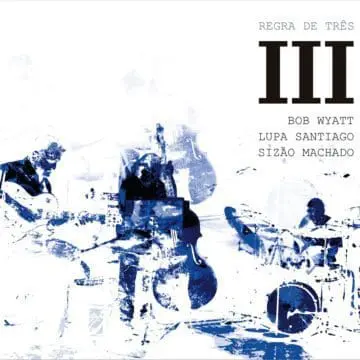
CD Regra de Três - III

Book New Chords Dictionary and Voice Leading for electric and acoustic guitar

Book Play Along Brazilian Odd Meters Music

Bands

Sextet

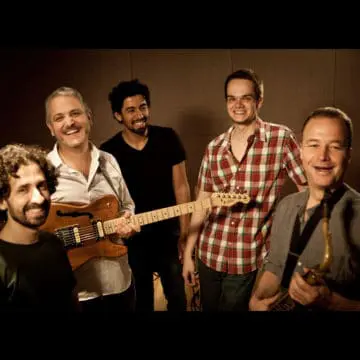
After several successful recordings with groups that I co-lead (Sinequanon, Jazz em Dobro e Regra de Três), it made sense to me to record a CD under my own name. Nonetheless, I truly feel that this band is a group of great friends with whom I have been able to share everything equally. I shared composing the repertoire with Nenê, a composer I greatly admire who provided two essential pieces he wrote especially for the group. For the arrangements, I found a rare partner: I had the enviably luxurious experience of communicating and creating daily with Rodrigo Morte, the seventh element of the sextet. Alberto Ranellucci, with whom I've been working for years, brought unprecidented understanding and unity to the sound.

In my own compositions, I tried to pay homage to the musicians who influenced me. Dolphy Dance is for Eric Dolphy, an important American musician from the 1960's. Stu is for Rodrigo Morte. Hélio & Heraldo (Delmiro and Do Monte) is for the two fathers of the Brazilian guitar. We'll Keep Swimming and Constantinopla for my other two groups: Sinequanon and Regra de Três.

The Sextet is sum of these great personalities, and with each measure that passes, the music is made complete by the concentration and self-deliverance of each one involved. I had already played with each musician in different situations, but something told me that we would eventually all wind up playing together at some moment.

I honestly believe that we came to this life for three things: to learn, to share, and to have fun. During the process of this recording, I found these characteristics during each step of the way, from the composing, to the arranging, to the playing and sharing with these great musicians. Thank you Vitor, Daniel, Vinicius, Nenê, Rodrigo, Luccas and Ranelluci.

Regra de Três

‘Regra de três’ is a an expression meaning “a path to find unknow values from values that we already know.”

For the trio, is the search for a original concept of sound and composition. Inspired by free jazz for the spirit and experimentation, the group has elements from contemporary and traditional jazz, as well as Brazilian Music.

The first CD, was release don May/2007 by Tratore records.

The second cd was released july/2009., it is called “Novas Regras”, the trio shows a variety of techniques, textures, timbers, exploring the expressive qualities of the instruments.

Each of the original compositions have their own sound environment.

A discovery, contemporary music searching for innovation.

Sinequanon

Releasing their fourth cd, Brazilian contemporary jazz group Sinequanon, with Lupa Santiago (guitar), Vítor Alcântara (saxophones), Guto Brambilla (acoustic bass) and Carlos Ezequiel (drums), explores collective improvisation and modern composition with great emphasis on the typical nuances of an acoustic setting. Their influences extend from post-bop and avant-garde jazz to contemporary Brazilian music and even twentieth-century classical music.

The group’s history goes back to 1997, when Lupa and Carlos started a partnership in Boston, USA. They performed extensively in the American East Coast scene in formats ranging from trios to septets, and in 2000 recorded the first album, “Images”, released in Brazil in 2001 and indicated to the Latin Grammy 2002 as “Best Latin Jazz Album”. As the duo returns to Brazil, a new quartet was put together with Vitor and Guto, and the group began to perform by the name Sinequanon. They recorded “Sinequanon” in 2003, “Telescópio” in 2005, and so far have been actively performing all over Brazil, with appearances in cities like São Paulo, Brasilia, Florianopolis, Joinville, Salvador, Aracaju, Maceió, to name a few.

“Horizonte Artificial” is the group’s newest release, recorded in October 2007 and arriving to Brazilian audiences in early 2008. Following on the same experimental and innovative musical personality, the album brings new surprises such as Brazilian highly-acclaimed trumpet player Daniel D’Alcântara as special guest, and three tracks recorded with a technique the quartet calls “collective overdub” (which consists of the entire group overdubbing itself). As always, the album was recorded live in studio.


Lupa Santiago